Stucco Remediation: 6 Signs Your NJ Home Needs It
Stucco is durable, but it is not permanent. When moisture finds a way behind the finish, the damage happens out of sight—inside the sheathing and framing—long before it shows on the surface. Here are six signs that your home may need stucco remediation.
1. Cracks That Keep Coming Back
Hairline cracks are normal. Cracks that widen, reappear after patching or follow window and door corners often point to movement or moisture behind the wall.
2. Bubbling, Blistering or Soft Spots
If the stucco feels hollow, soft or loose when tapped, the bond has failed. Bubbling usually means water is trapped behind the finish.
3. Water Stains Indoors
Stains on interior walls or ceilings near windows, doors and wall bases are a strong signal that water is getting behind the stucco and through the wall assembly.
4. Rusted or Loose Flashings
Failed flashing at windows, doors and roof lines lets water in. If the metal is rusted, lifted or sealed with caulk instead of properly integrated, the wall is at risk.
5. Efflorescence or Chalky Deposits
White, chalky stains on the surface can indicate moisture moving through the stucco and leaving minerals behind.
6. A Recent Inspection Found High Moisture
Moisture meters tell the real story. If readings are elevated behind the finish, remediation is usually the right call—even when the surface still looks acceptable.
What Remediation Actually Involves
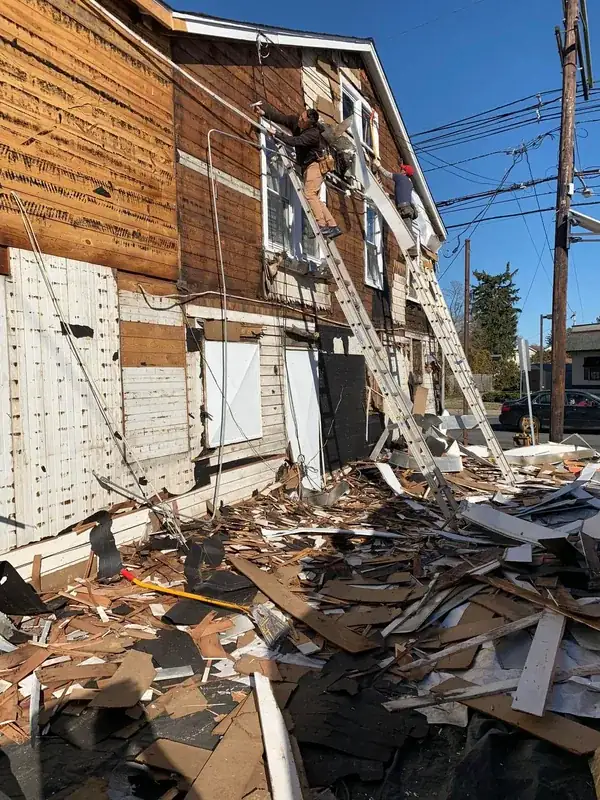
A proper repair is not a coat of paint or a patch. It means removing the failed stucco, repairing or replacing the substrate, installing a weather-resistive barrier and drainage plane, re-flashing openings, and applying a new finish system.
Why It Matters
Ignoring moisture leads to rot, mold and structural damage that costs far more than the remediation itself. Fixing the cause protects the home and the investment.
Avany Contractors provides stucco remediation across New Jersey and Pennsylvania. Request a free inspection to find out what is really happening behind your stucco.